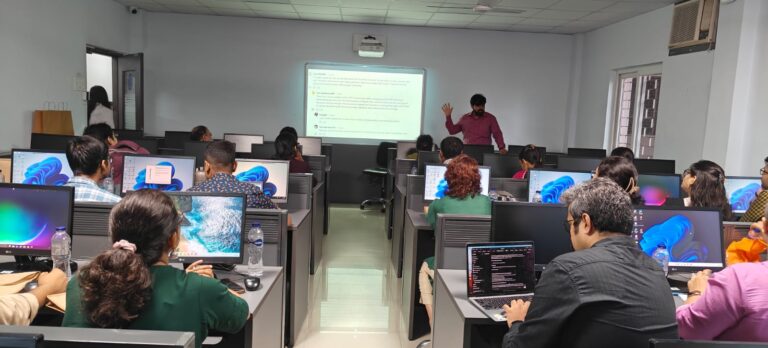
From 19th May to 23rd May 2026, the Department of Commerce, Morning, The Bhawanipur Education Society College, successfully organised a Five-Day Faculty Development Programme on “Artificial Intelligence and Machine Learning in Contemporary Finance.” The programme was conducted from 9:30 a.m. to 3:30 p.m. in Labs 442/443, with hands-on training sessions held in the laboratories alongside the sessions.
The FDP was designed to introduce participants to the growing role of Artificial Intelligence and Machine Learning in finance, commerce, research, and business decision-making. With the increasing use of data-driven models in stock market analysis, credit risk assessment, portfolio optimisation, financial forecasting, and business intelligence, the programme aimed to equip faculty members, researchers, and learners with both conceptual understanding and practical exposure.
The programme was conducted under the guidance of the college authorities and the Department of Commerce, Morning. The FDP was held under the patronage of Dr Subhabrata Ganguly, Teacher-in-Charge, and Prof. Dilip Shah, Rector and Dean of Student Affairs. Prof. Minakshi Chaturvedi, Vice-Principal, Department of Commerce, Morning, served as a member of the Advisory Committee. The programme was convened by Dr Sreyasi Ghosh, Assistant Professor, Department of Commerce, Morning. The core committee consisted of Samrat Chatterjee, Ibrahim Hussain, and Sankha Acharya from the Department of Commerce, Morning.
The inaugural session set the academic tone for the programme. The resource persons for the programme were Prof. Jaydip Sen, Assistant Professor, Praxis Business School; Prof. Sourav Saha, Professor, Praxis Business School; Prof. Nirendu Konar, Faculty – Advanced Business Analytics and Predictive Modelling and AIML Consultancy Services, IBS; Dr Prasenjit Kundu, Visiting Faculty, PG Department of Statistics and Analytics, MAKAUT Main Campus; and Dr Arunaya Bandopadhyay, Assistant Professor, Finance, IMI Kolkata. They highlighted the importance of AI and ML in contemporary finance and discussed how emerging technologies are reshaping financial analysis, forecasting, investment research, and decision-making.
The opening day focused on the fundamentals of Artificial Intelligence and Machine Learning, their relevance in commerce and finance, and the changing expectations of finance educators in an increasingly data-driven world.
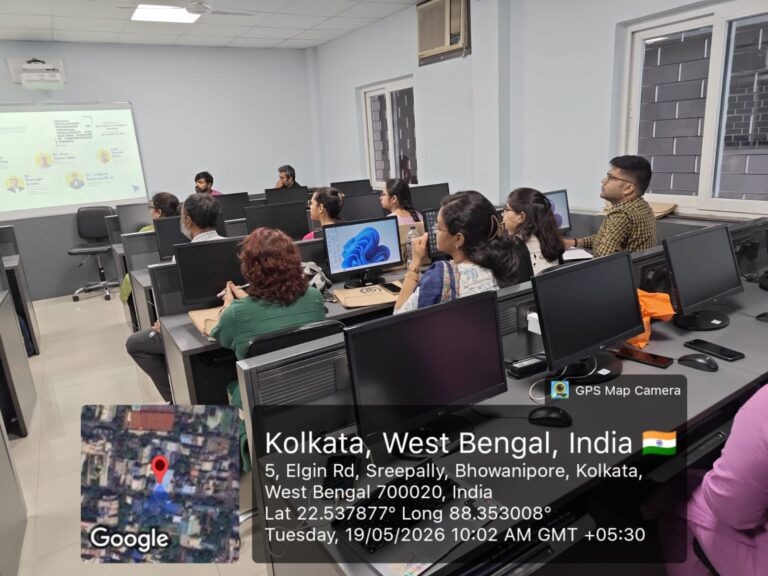
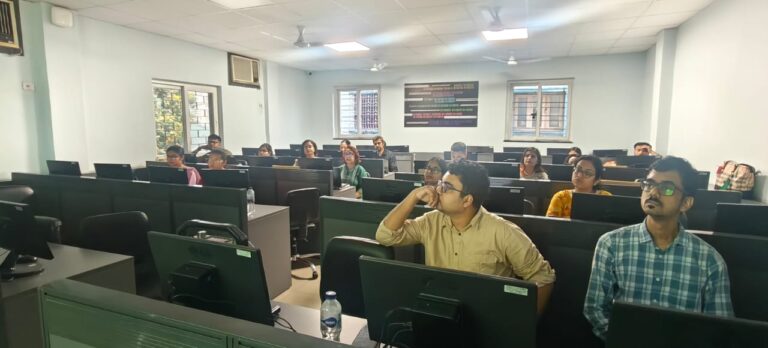
The second day of the FDP focused on statistical foundations and model validation techniques. Participants were introduced to advanced statistical methods used in business and financial inference, including the bias-variance trade-off, cross-validation, p-values, OLS, Random Forest, Decision Trees, ensembles, confidence intervals, and their relevance in commercial decision-making. The sessions helped participants understand the importance of building reliable, interpretable, and validated models rather than merely depending on automated outputs.
The third day explored Neural Networks and their commercial applications. The sessions covered fundamental concepts such as perceptrons, activation functions, forward and backpropagation, loss optimisation, and regularisation. Special emphasis was placed on the application of neural networks in areas such as stock price trend analysis, credit risk modelling, sales forecasting, and portfolio optimisation. Participants also discussed the differences between tree-based models and neural models, along with the importance of hyperparameter tuning and performance metrics.
The fourth day focused on Unsupervised Learning for Business Applications, covering techniques such as clustering, market basket analysis, and sentiment analysis. The sessions explained how these methods help in customer segmentation, buying-pattern analysis, and feedback interpretation. The day also covered AI/ML pipelines for business workflows, including feature engineering, PCA, and workflow optimisation for business data. Participants were introduced to advanced Gen AI and Agentic AI tools for business and research applications. The hands-on session involved business app development and deployment using Gen AI and Agentic AI tools, helping participants connect AI concepts with practical business use cases.
The fifth and final day focused on the ethical dimensions of AI in commerce. The session covered key concerns such as algorithmic bias in business datasets, fairness in customer models, explainable AI, and privacy issues related to data protection in transactions. The discussion encouraged participants to view AI not only as a technical tool but also as a system that must be used responsibly in commerce and finance. The day also included the examination and certification process. Participants appeared for the assessment based on the five-day FDP, after which certificates were awarded upon successful completion of the programme.
Across the five days, the FDP maintained a strong balance between theory, application, and hands-on training. The sessions were interactive, with participants engaging in discussions, demonstrations, practical exercises, and question-and-answer rounds. The programme encouraged faculty members to think beyond traditional finance teaching and explore how AI and ML can be integrated into classroom learning, research methodology, financial modelling, and business analytics.
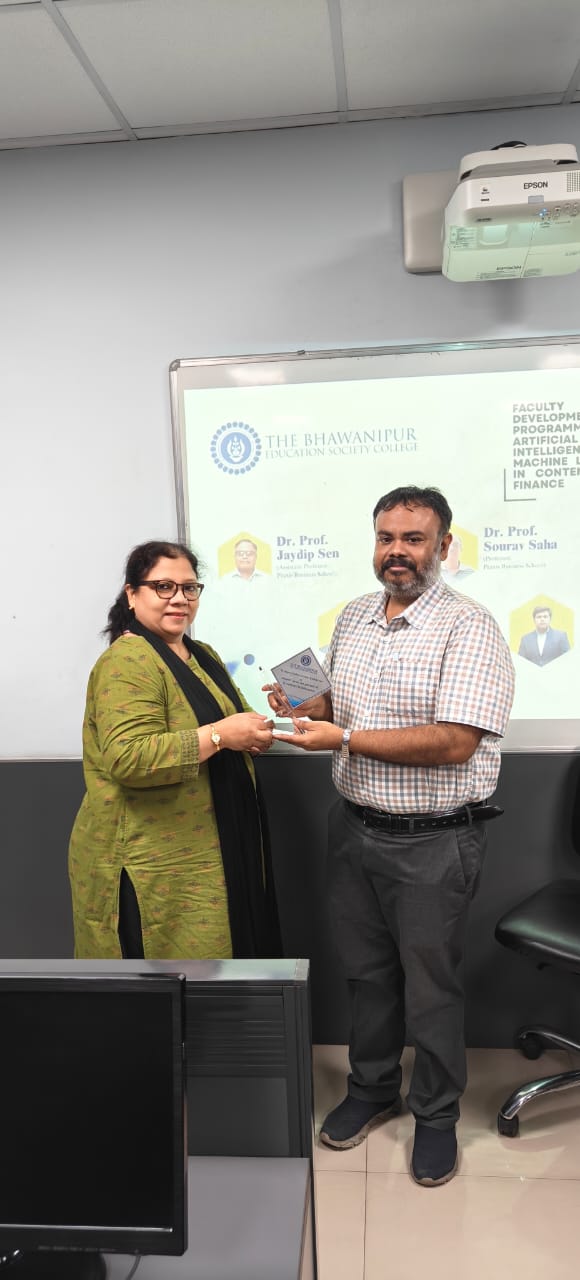
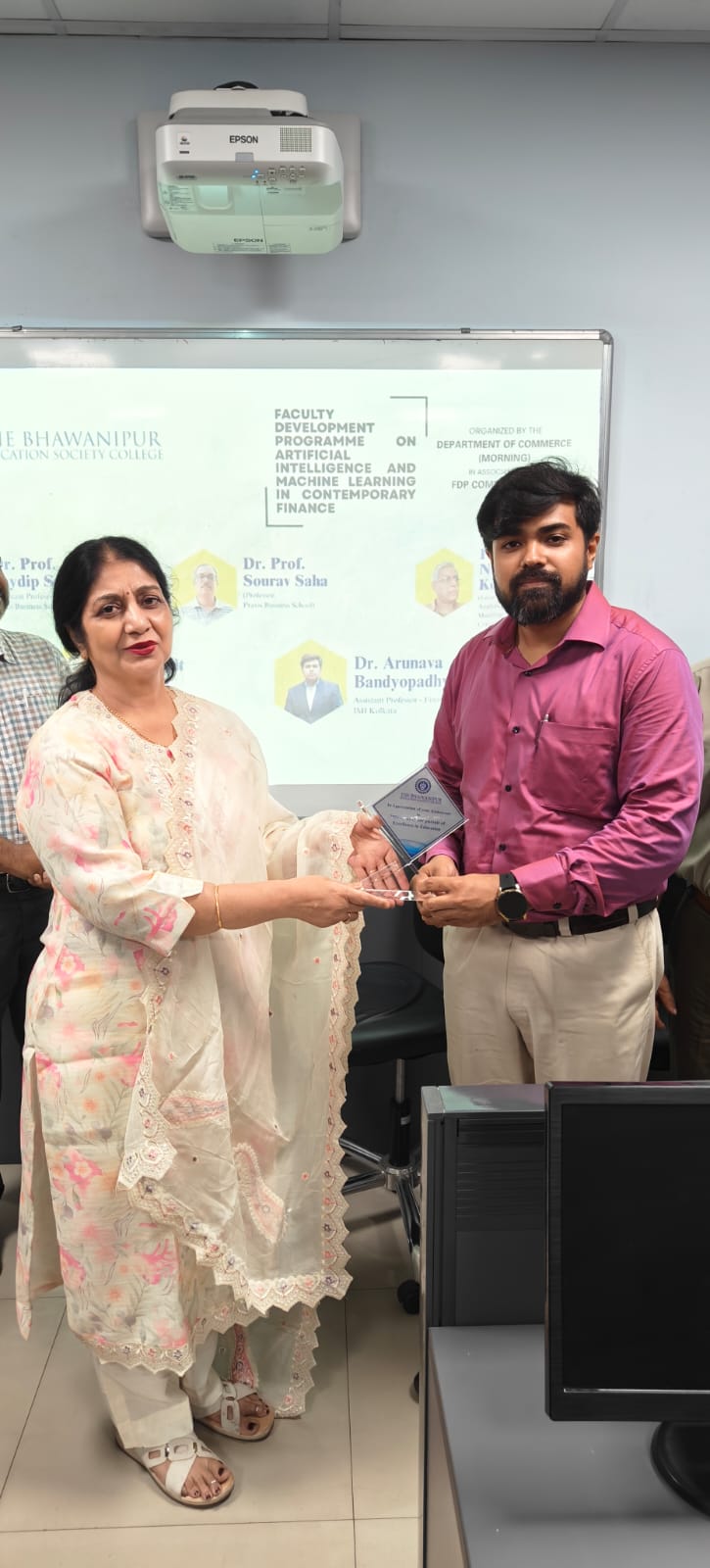
The valedictory session marked the successful completion of the programme. Participants shared their reflections and appreciated the relevance of the sessions, especially the practical demonstrations and finance-focused examples. Certificates were distributed to the participants, and the organisers thanked the resource persons, college authorities, the organising committee, the technical support team, and all participants for their active involvement.
The Five-Day FDP on Artificial Intelligence and Machine Learning in Contemporary Finance concluded on a highly positive note. It served as a meaningful academic initiative that strengthened awareness, confidence, and capability among participants in using AI and ML tools for finance education, research, and professional practice. The programme reaffirmed the institution’s commitment to promoting future-ready learning and encouraging faculty development in emerging areas of commerce, finance, and technology.
