Type of Activity: Special Lecture
Date: 16th September, 2025 (One day)
Time: 1:45 p.m. – 2:30 p.m.
Details of Resource Person(s): Ms. Atrayee Biswas, Faculty Member, Department of Geography, The Bhawanipur Education Society College
No. of Participants: 43
Objective of the Event:
To create awareness among students and faculty about the significance of the ozone layer in protecting life on Earth.
To highlight how everyday choices contribute to ozone depletion and what individual steps can help in its recovery.
To sensitize participants to international measures such as the Montreal Protocol and their local implications.
Brief Description of the Event:
On the occasion of the International Day for the Preservation of the Ozone Layer, the Environmental Committee and the Department of Geography, in association with the IQAC of The Bhawanipur Education Society College, organized a special lecture on 16th September, 2025, at 1:45 p.m. in Room No. 544.
The lecture was delivered by Ms. Atrayee Biswas (Faculty Member, Department of Geography) on the theme “Everyday Choices and Global Impact: How We Affect the Ozone Layer.” The event began with a brief introduction by Gahana Ray, a Semester I student of the JMC Department, who explained the significance of the day and the vital role of the ozone layer in protecting living beings from harmful ultraviolet radiation.
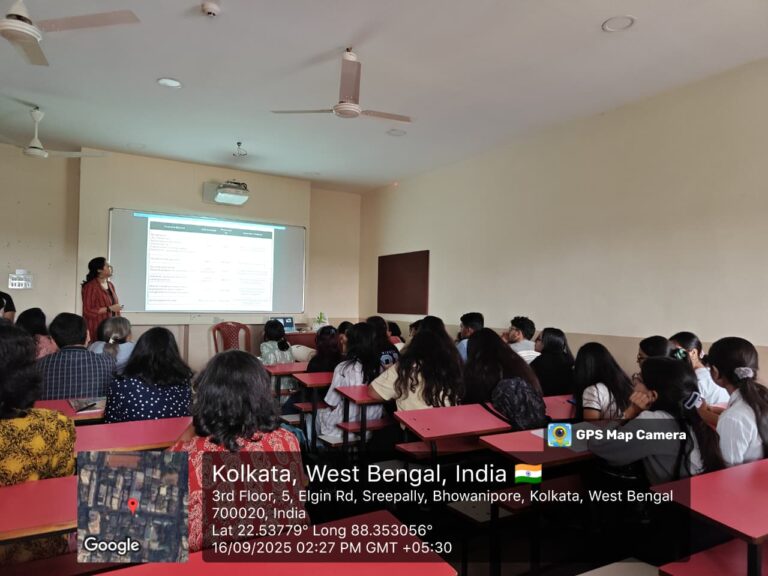
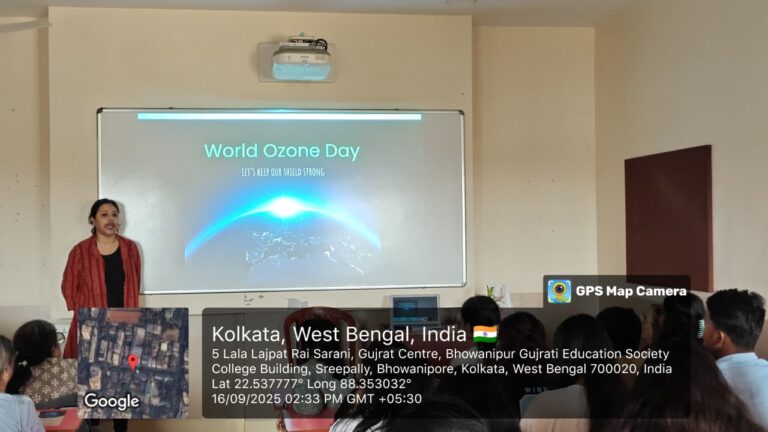
In her address, Ms. Biswas explained how chlorofluorocarbons (CFCs) from old refrigerators, air conditioners, aerosols, and pesticides (methyl bromide) rise into the stratosphere, releasing chlorine and bromine atoms that deplete the ozone. She highlighted the dangers of the ozone hole over Antarctica, the link between ozone depletion and health hazards such as skin cancer and immune suppression, and the ecological damage caused by increased UV-B radiation.
She also spoke about international responses such as the Montreal Protocol (1987), global campaigns to reduce harmful chemicals, and the promotion of sustainable practices. Importantly, she emphasized that small actions—such as saving electricity, avoiding harmful products, and choosing eco-friendly alternatives—can significantly aid ozone recovery.
The session concluded with a summarization by Aarushi, another Semester I student of the JMC Department. The event was both informative and inspiring, underlining that the responsibility of protecting the ozone layer rests not only with scientists and governments but also with individuals through conscious everyday choices.
Outcome of the Event:
Students and faculty members gained awareness of the scientific and socio-political dimensions of ozone layer protection.
Participants understood the connection between individual lifestyle choices and global environmental issues.
The lecture encouraged the adoption of eco-friendly practices within the campus and beyond.
