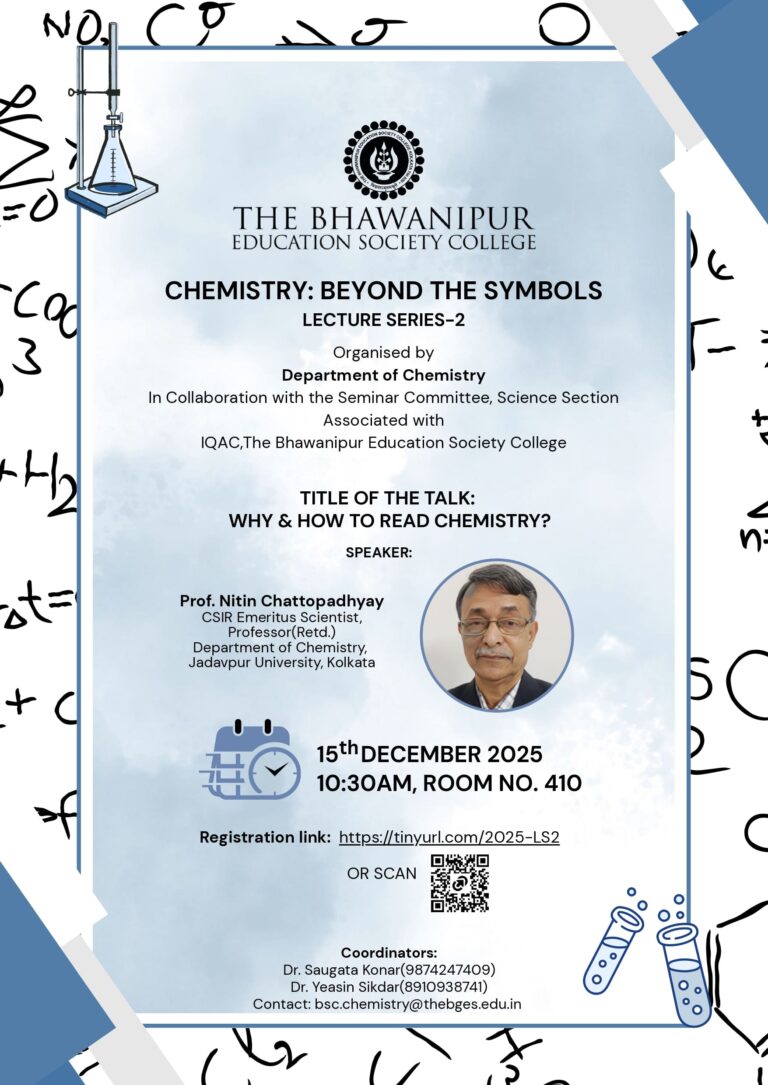
Name of the Activity: CHEMISTRY: BEYOND THE SYMBOLS (LECTURE SERIES-2)
Type of Activity: Class Lecture
Date: 15th December, 2025
Time:10:30 AM to 12:00 PM
Details of Resource Person:
Prof. Nitin Chattopadhyay
CSIR Emeritus Scientist, Professor (Retd.)
Department of Chemistry,
Jadavpur University, Kolkata.
No. of Participants: Student = 32; Faculty = 14; Staff = 7
Objective of the event:
The primary objective of the event was to encourage students to look beyond chemical symbols and equations and develop a conceptual and analytical understanding of chemistry. The lecture aimed to guide participants on why chemistry should be read thoughtfully and how scientific texts, concepts, and research literature can be approached critically and meaningfully. It also sought to inspire intellectual curiosity, enhance scientific reasoning, and cultivate effective learning habits among students, thereby promoting a deeper appreciation of chemistry as a dynamic and interdisciplinary science.
Brief description of the event:
The Lecture Series–2, titled “Chemistry: Beyond the Symbols”, was organized by the Department of Chemistry, The Bhawanipur Education Society College, in collaboration with the Seminar Committee, Science Section, and associated with IQAC, The BES College. The lecture “Why & How to Read Chemistry?” was delivered by Prof. Nitin Chattopadhyay, CSIR Emeritus Scientist and former Professor of Chemistry, Jadavpur University, Kolkata.
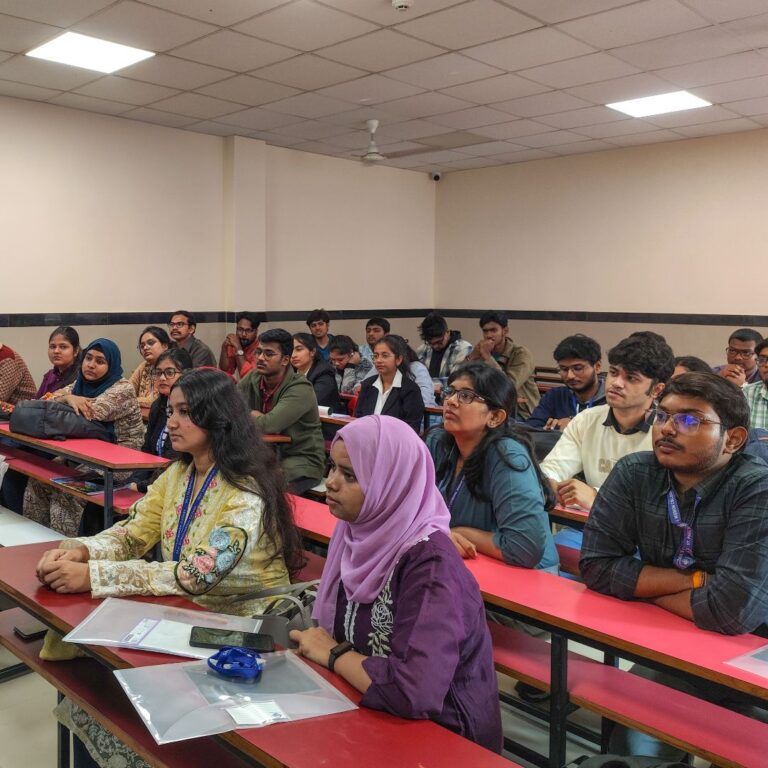
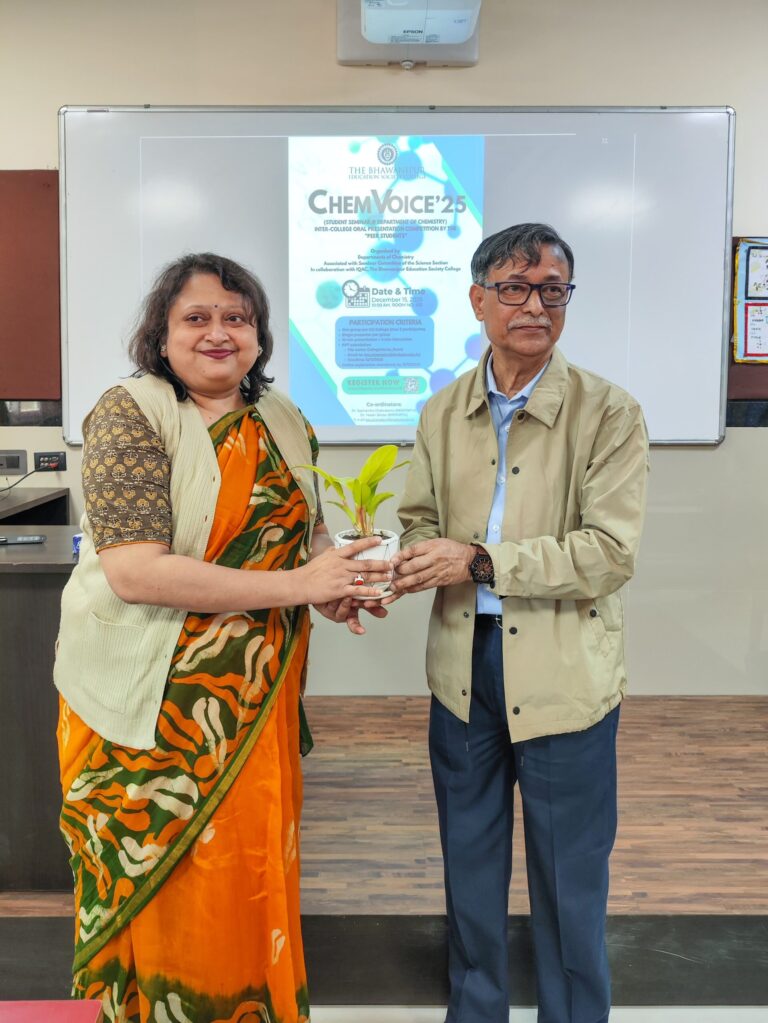
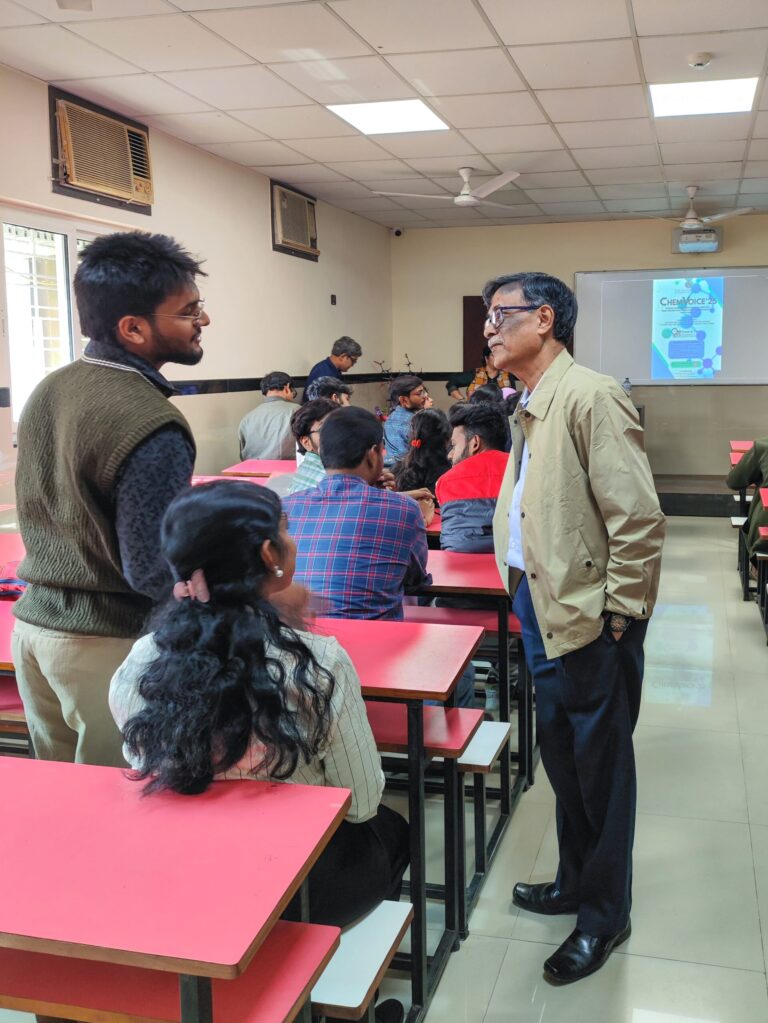
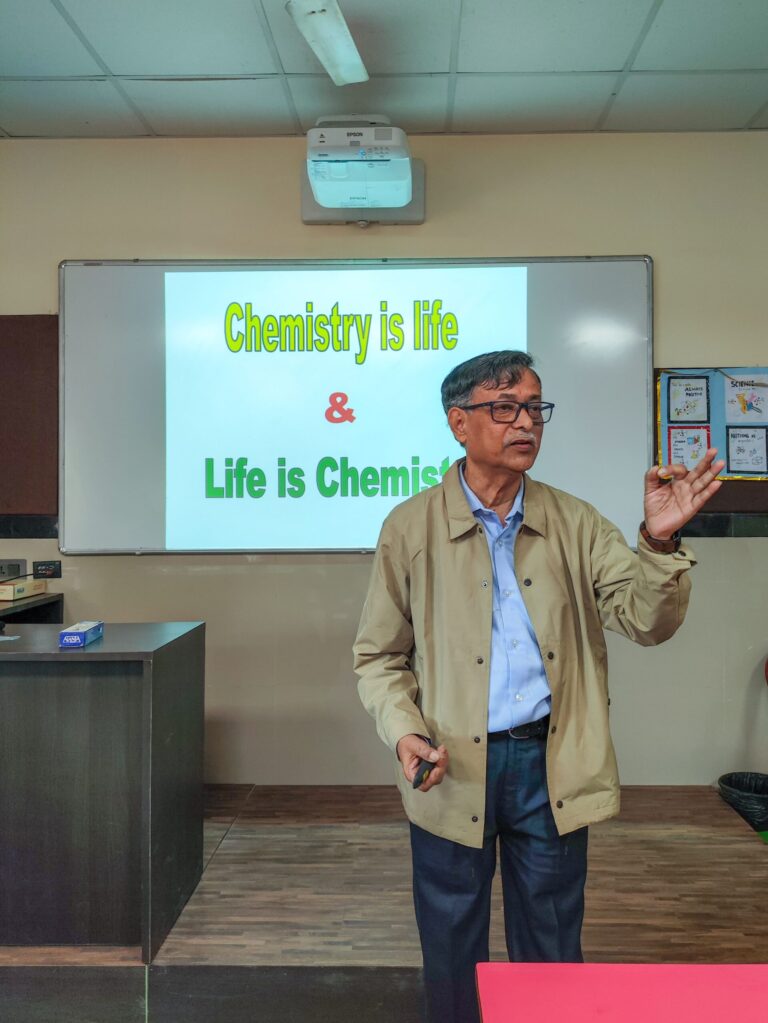
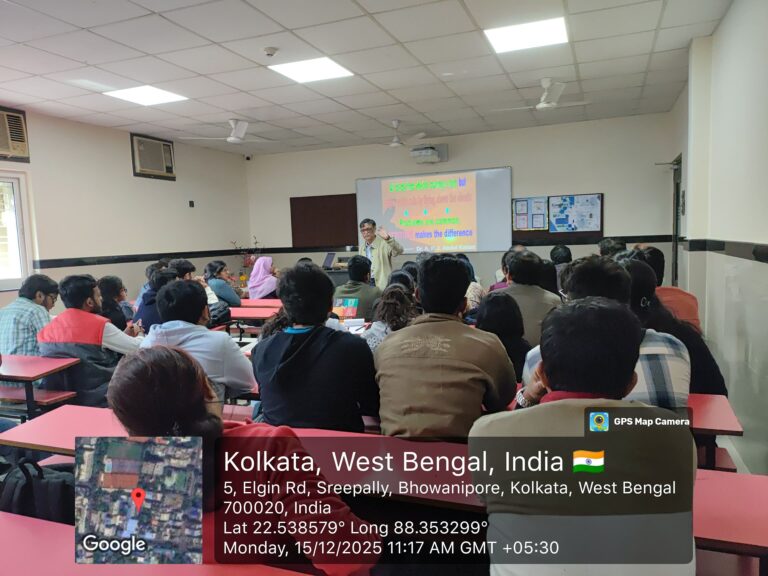
The session aimed to move beyond rote learning of formulas and symbols, encouraging students to understand chemistry as a conceptual, logical, and interdisciplinary science. Prof. Chattopadhyay shared insights drawn from his vast academic and research experience, emphasizing critical reading of scientific texts, interpretation of data, and the development of scientific curiosity. The lecture was attended by undergraduate student and faculty members, making it an engaging and intellectually stimulating academic event.
Outcome of the event:
The lecture successfully inspired participants to adopt a deeper and more analytical approach towards learning chemistry. Students gained clarity on effective strategies for reading and understanding chemical literature, textbooks, and research papers. The interactive nature of the session enhanced critical thinking, scientific reasoning, and curiosity among the participants. Faculty members and students alike benefited from the speaker’s emphasis on conceptual understanding, lifelong learning, and the relevance of chemistry in addressing real-world problems. Overall, the event strengthened academic engagement within the department and reinforced the importance of thoughtful and reflective learning in chemical sciences.
