Name of the Programme: Application of electronic circuits and sensors – AECS 2025 Type of programme: Add-on course Organizing department: Electronics Duration of the programme: 19-07-2025 – 26-09-2025 Time: 30-hours (Every Saturday) Details of Resource persons:
- Dr. Debarup Roy, Assistant Professor, Dept. of Electronics
- Mr. Rabisankar Bag, CWTT, Dept. of Electronics
- Mr. Sudipto Koley, Laboratory Assistant, Dept. of Electronics
No. of Participants: 15 students Course content: Theoretical Sessions
| Sl. No. | Content |
| 1. | Introduction to analog electronic circuits |
| 2. | Introduction to digital electronic circuits |
| 3. | Introduction to different electronic sensors |
| 4. | Introduction to Arduino |
Practical Sessions
| Sl. No. | Content |
| Simple obstacle detection using electronic circuit | |
| Motion detection and velocity calculation using Arduino | |
| Application of various sensors using Arduino | |
| Development of a functional robotic car |
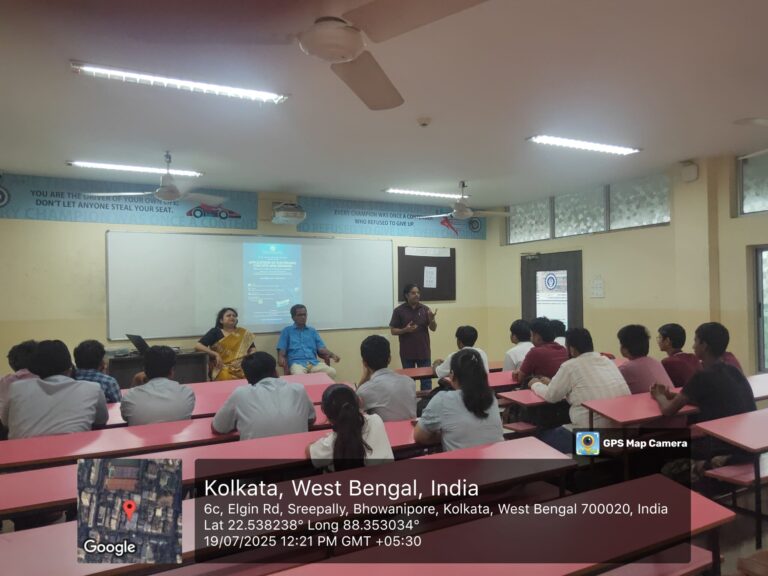
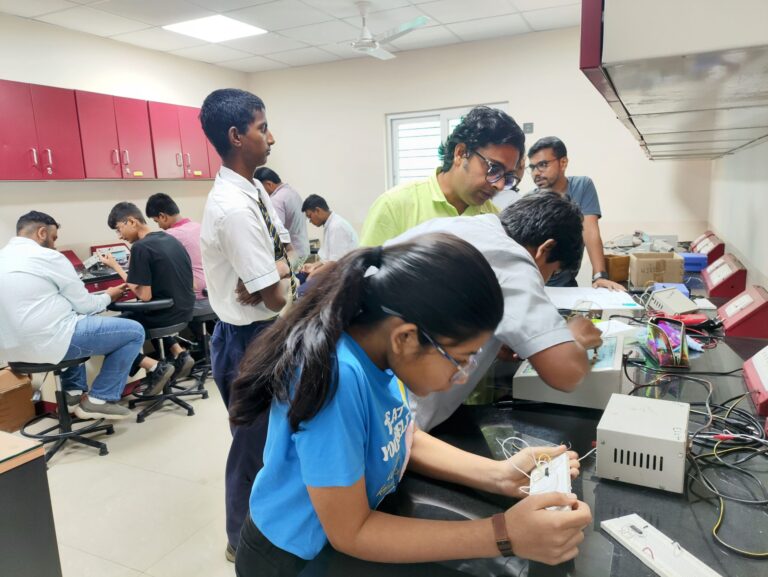
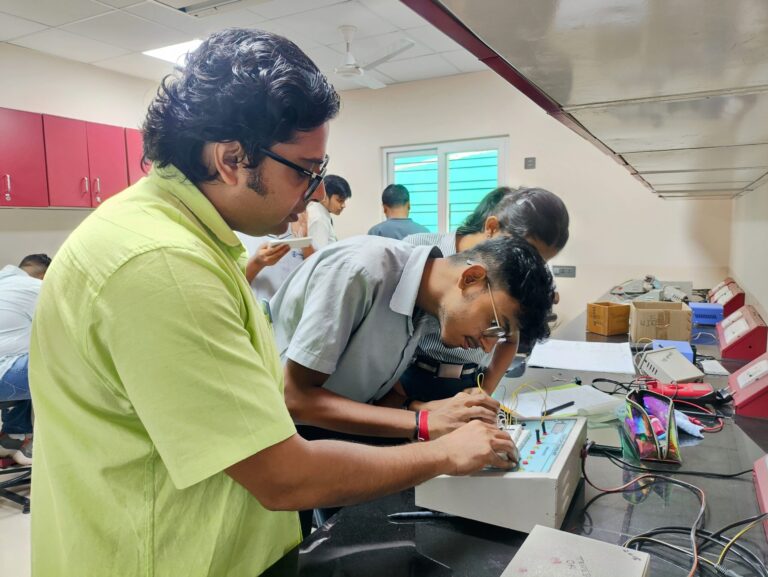
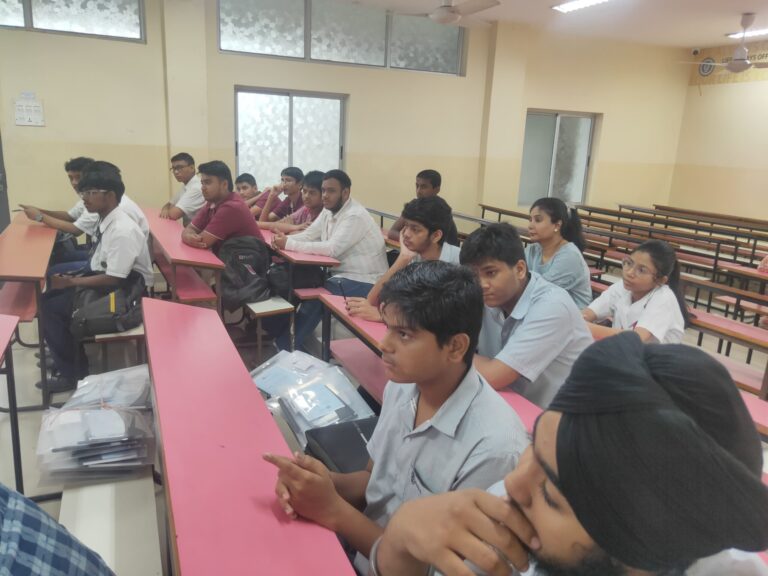
Objective of the event: To give a flavour of some interesting and real applications of electronics to the school students of senior secondary course studying science. Brief description of the event: The 30-hour add-on course is designed with a view to enable the course participants to understand the domain of electronics beyond the regular curriculum with special emphasis on Arduino microcontrollers. The experiments have been carefully chosen keeping in mind the direct application of textbook material in real life scenarios. The hands-on practical on the electronic circuits combined with the associated design troubles helped the students realize the effort that goes into troubleshooting and hence, to come up with tractable solutions.The potential application of electronic sensors in reading a speeding object or to count the number of objects occupying a given closed space was also discussed and realized using Arduino UNO microcontroller. The course ended with an earnest urge for continuation of this course with newer and more impactful experiments from both the participants and the academic office bearers. Course outcome: The participants from various reputed schools including BGESS learned how electronics work in real life and hopefully, gathered a sense of what a course curriculum having an alignment with the electronics manufacturing and automation sectors should be.
